
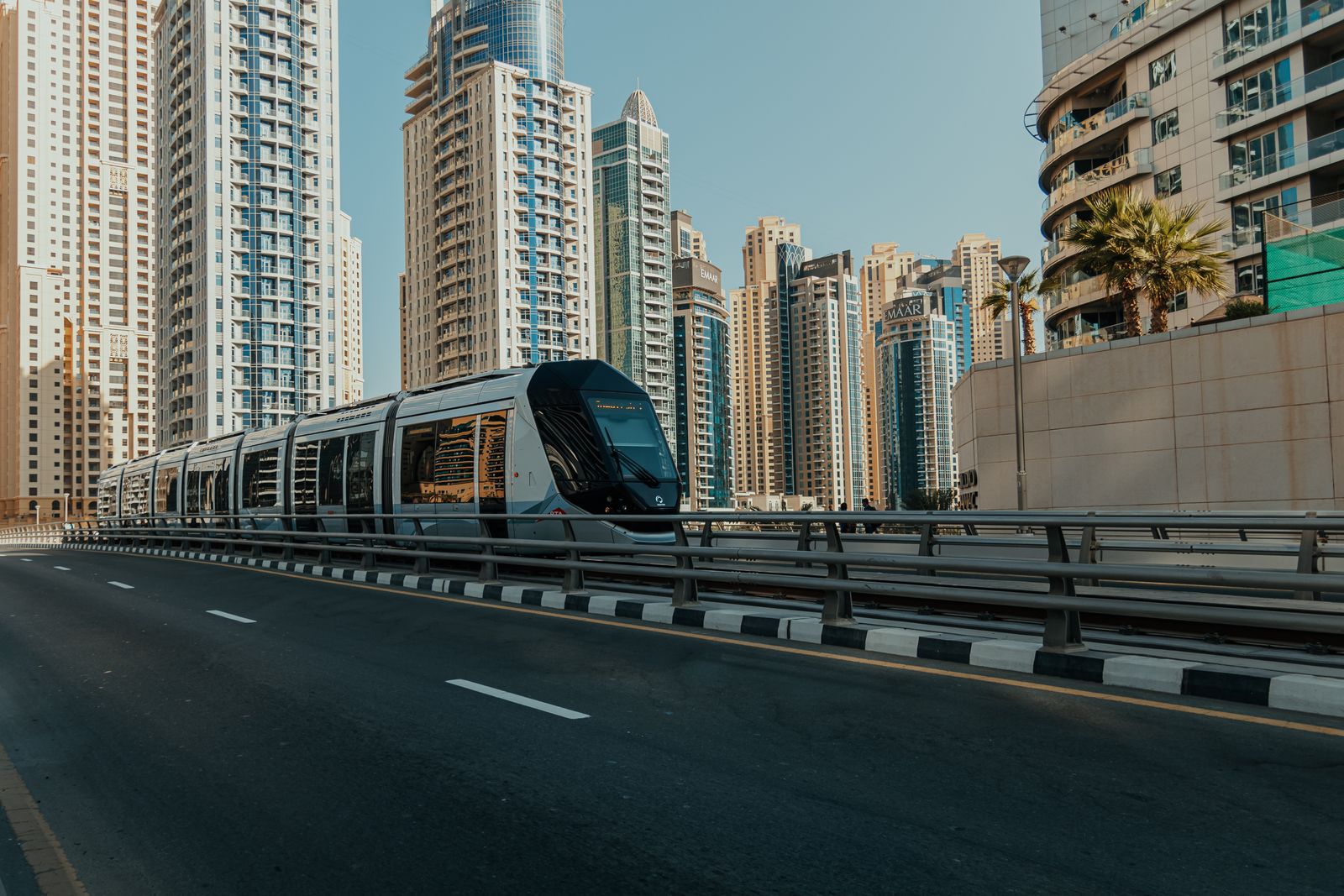
Dubai’s waterfront districts become more interesting when they can be explored as connected places rather than isolated stops. The tram offers one way to build that connection. A useful itinerary begins with the destinations you want to reach, then uses the official network information to join them together.
Read the tram as part of a network
RTA describes Dubai Tram as a link within the city’s transport network, connecting with Dubai Metro and the Palm Monorail and serving the Al Sufouh and Jumeirah Beach corridors. Its official station map provides the reference for planning the rail portion of a journey.
A connection on a network diagram does not remove the walking and orientation needed between services. Check the relevant station, entrance and transfer route. Use current RTA information for service arrangements rather than relying on an old screenshot or a place name remembered from an earlier visit.
Choose a small number of destinations
A waterfront itinerary might combine a cultural or leisure stop, a meal and a walk in a different part of the area. Select the actual venues first. Then identify the appropriate tram stops and the route between each stop and the venue entrance.
Avoid adding destinations simply because their district appears nearby. A shorter itinerary with time to explore can be more rewarding than a longer list dominated by repeated transfers. If travelling with a group, agree a meeting point that is easy to identify, and allow time for everyone to orient themselves after leaving a station.
Check the practical journey details
Before travelling, confirm current operating information, payment arrangements and any service updates through RTA. Choose the appropriate travel product for the services you intend to use; do not assume that a separate transport operator uses identical ticketing conditions.
Plan the final part of the return journey as carefully as the outward trip. The last stop on an itinerary is not necessarily the most convenient starting point for getting home. For visitors, a clear return plan also makes it easier to enjoy an unhurried evening without continuously checking transport options.
Use the itinerary to understand the district
The tram can also provide a framework for learning how different waterfront neighbourhoods connect. Observe the public spaces, walking approaches and types of destinations around each stop. The experience can add useful context to a later, more specific housing search.
A practical trip note might record the chosen station, the venue entrance, the interchange used and the time allowed for walking. Note which parts felt straightforward and which needed more orientation. This is a description of one actual journey, not a guarantee that every trip will take the same time.
For a resident considering the area, repeat the relevant part of the itinerary on an ordinary day. The aim is to discover which connections would become useful habits: a favourite walk, a regular appointment or an easy meeting place. In that way, transport infrastructure contributes to the experience of living in Dubai as well as the experience of visiting it.
Sources & further checks
Official references reviewed for this article. Practical comparisons and checklists are CyDubai editorial guidance.
Information reviewed on 3 November 2026. Confirm current service details and requirements with the relevant provider. Editorial standards