
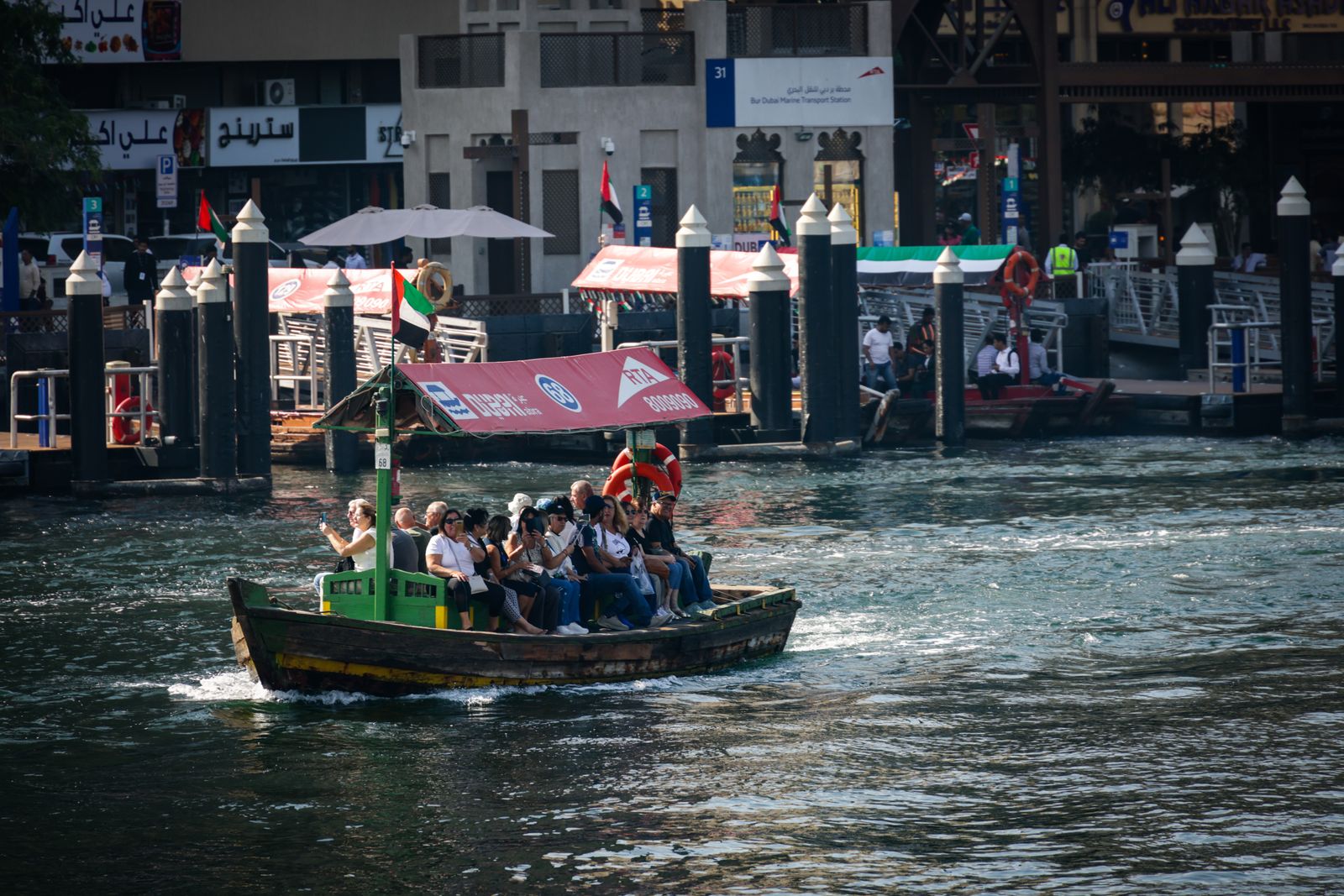
A short crossing can change the way a city is understood. On Dubai Creek, the journey between the banks is part of the experience of the surrounding streets and trading districts. Planning an abra crossing around the places you want to explore makes the water a connection rather than simply a backdrop.
Understand which service you are choosing
RTA’s marine transport information distinguishes several forms of water travel, including abras, ferries and water taxis. These services should not be treated as interchangeable. For an abra outing, begin with the specific route and station information provided by RTA.
Traditional transport and sightseeing experiences can also have different arrangements. Identify whether the service you are researching is a public crossing or a separately arranged experience. Confirm the current payment and operating details for that service rather than assuming every boat follows the same conditions.
Plan the two banks together
Choose a small number of places on each side of the water and consider the crossing as the link between them. A market visit, a heritage walk and a quiet pause by the Creek can form a coherent outing without a tightly packed list of attractions.
Use the exact station names when sharing the plan with companions. A broad instruction such as meeting by the Creek leaves too much room for confusion. Check the walking approach to the station and decide where the group will gather before boarding. The simpler the meeting arrangement, the more attention can be given to the place itself.
Let the crossing add context
Look at how the waterfront works as a space for movement, trade and everyday activity. The value of the outing is not limited to a photograph taken from the boat. Arriving on the opposite bank gives a different perspective on the streets, buildings and destinations already visited.
Leave time to explore on foot after the crossing. A useful route can include places to sit, refreshments and a straightforward way to return. Confirm opening arrangements for any particular attraction separately; the existence of a transport connection does not establish that every nearby venue will be available on the day.
Keep the plan flexible and respectful
Check current RTA service information before setting out, follow staff instructions and use the boarding arrangements provided. If members of the group have specific access needs, establish how those needs can be accommodated before relying on a particular crossing.
A simple preparation note can list the outward station, the destination bank, the intended walking stops and the return option. Add the source and date of the service information used. This gives the group a clear plan while leaving enough room to pause when a street or waterfront view becomes interesting.
For someone new to Dubai, the outing can be a reminder that the city’s identity includes working connections as well as celebrated landmarks. The most rewarding visit follows those connections with curiosity: cross the water, explore the destination and notice how the next part of the city fits into the larger story.
Sources & further checks
Official references reviewed for this article. Practical comparisons and checklists are CyDubai editorial guidance.
Information reviewed on 3 November 2026. Confirm current service details and requirements with the relevant provider. Editorial standards